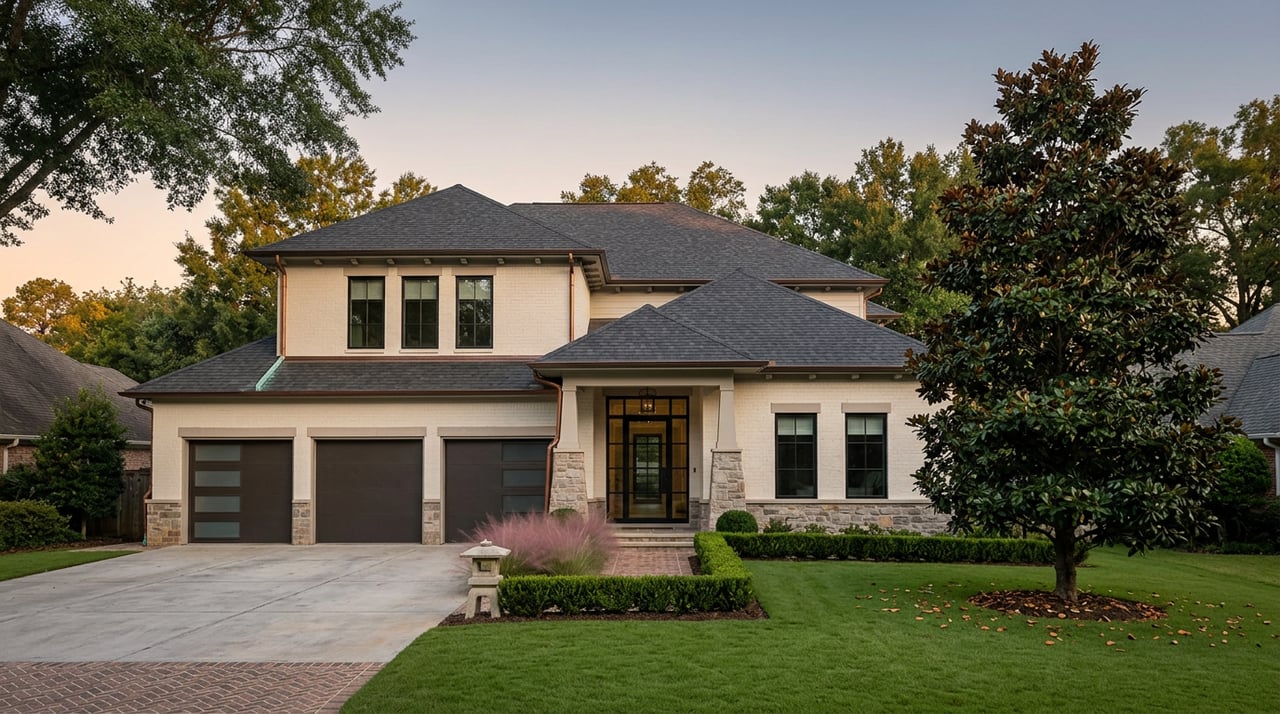
Duluth Country Club HOA Fees vs Membership: Know the Difference
A buyer client of mine fell for a home in Sugarloaf a few months back. Guard gate, tree-lined streets, a HOA due that looked almost modest for the address. She ran her own numbers off the listing sheet, felt good about the math, and wrote an offer. It wasn't until her agent pulled the actual association documents during due diligence that a second number showed up: a country club membership with an initiation fee in five figures, separate from the HOA entirely, and not something the resale paperwork was built to flag.
She wasn't wrong to miss it. Nothing on a standard Georgia HOA resale certificate is designed to catch it. That's the part worth understanding before you write an offer in one of Duluth's golf-course communities, because two homes can carry the same "Country Club" name in the neighborhood and mean two completely different financial commitments.
When you buy into a Georgia HOA, the seller is generally responsible for producing a resale certificate that spells out current dues, any unpaid assessments, pending violations, and fees due at closing. It's a real document with real teeth, and it's usually prepared by the community's management company for a fee that typically runs a few hundred dollars.
In a community like Sugarloaf, that certificate will show you the mandatory property owners association due, which covers things like the guard gate, common area landscaping, and private road maintenance. Depending on which pocket of Sugarloaf a home sits in, that figure lands anywhere from roughly a couple thousand dollars a year up toward several hundred dollars a month. It's a real cost, and it's the one every buyer sees because it's baked into the document everyone already knows to request.
That number is complete, accurate, and still not the whole story.
The golf course, the tennis complex, the dining room, the pools at the sports center: none of that is owned or operated by the HOA. It belongs to the country club, which is a separate legal entity with its own membership agreement, its own initiation fee, and its own dues schedule. The HOA due keeps the gates working and the grass cut. The club membership is what actually gets you access to the amenities that made you want the address in the first place.
That distinction matters because the two costs don't scale together. Industry data on private club membership pricing puts the average initiation fee at Duluth-area private clubs around $27,000, a figure specifically tied to the caliber of course anchoring communities like Sugarloaf. Compare that to an HOA due that might be a few thousand dollars a year, and you can see how a buyer doing quick math off the listing sheet ends up planning for the wrong number entirely.
Whether that club membership is mandatory or optional, and whether it's even required for a given home, is not something the resale certificate is built to disclose. It lives in a separate contract between the buyer and the club, and the only way to see it clearly is to ask for it directly.
This is where the name on the sign stops being useful. Duluth has more than one community built around a golf course, and the word "Country Club" shows up on more than one of them without meaning the same thing twice.
| Sugarloaf Country Club | St. Marlo | |
|---|---|---|
| HOA structure | Guard-gated POA covering common areas, private roads, security | Homeowner-elected association board managing covenants and community standards |
| Golf course | Private, TPC-affiliated, Greg Norman design | Public course open to non-residents |
| Club membership | Separate golf, social, and sports memberships with their own initiation cost | No membership required to live in the community; anyone can book a tee time |
| Cost to play golf | Requires club membership | Roughly $79 to $89 per round, open to the public |
Sugarloaf's golf course sits behind a private membership structure. St. Marlo's course is open to the public, which means the "country club" in that name describes what's next door, not a financial obligation attached to the deed. A buyer comparing two listings with similar price tags in these two communities could be looking at two entirely different total costs of ownership, and nothing about the addresses themselves would tell you that.
This is the part that doesn't show up in a median price or a per-square-foot comparison. It shows up when you ask the right question of the right entity, which for club dues is the club itself, not the HOA management company.
Duluth's resale market has cooled enough this year that buyers have more room to do this kind of homework before a deadline forces their hand. Homes across the city have been taking longer to sell in 2026 than they did a year or two ago, with days on market running well into the thirties and, in some segments, past forty, up from the high twenties and low thirties reported for the same period last year across multiple market trackers. That's not a market in trouble. It's a market that's given buyers back some breathing room after a run of homes going under contract in a matter of days.
That breathing room is worth using. A due diligence period that isn't being compressed by five competing offers is the right window to call the club directly, ask whether membership is mandatory for the home you're considering, and get the actual initiation fee and dues schedule in writing before you're past your contingency date.
A few documents and a couple of phone calls answer almost every version of this question:
None of this is complicated once you know to ask. The trouble only shows up when a buyer assumes the HOA paperwork covers everything a golf course community might charge for.
Is country club membership required to buy a home in Sugarloaf? It depends on the specific section and subdivision within the broader Sugarloaf area, since the master-planned community includes multiple HOAs with different rules. The only reliable answer comes from that subdivision's CC&Rs and a direct conversation with the club, not from the listing description.
Does the HOA resale certificate fee include anything for the country club? No. The resale certificate fee covers the cost of preparing the HOA's own disclosure document. Club membership terms and initiation fees are handled entirely separately by the club.
Can an existing club membership transfer to a new buyer? Sometimes, but not automatically, and terms vary by club. This is worth confirming in writing before closing rather than assuming it carries over with the deed.
Buying into one of Duluth's golf course communities can be a genuinely good move, and the amenities that come with a club membership are often exactly what draws people there in the first place. The goal isn't to talk anyone out of it. It's to make sure the number you're budgeting for is the real one, not just the one that happened to be easiest to find.
If you're weighing a home in Sugarloaf, St. Marlo, or anywhere else in Duluth's golf course footprint, I can help you get the actual membership terms in hand before your due diligence period runs out. Reach out to Jonathan Leach and let's connect.
This article is general information, not legal, tax or financial advice. Consult a qualified professional about your situation.


Work with Jonathan Leach, an advocate who understands luxury, culture, and strategy, and is committed to protecting your goals from the first showing to closing.